Examining Correlations Between Public Transport Schedule Shifts and Adjustments in Deposit Match Values on Approved Swedish Mobile Gambling Platforms
Skriven av Wendy Richter · 2026-11-07
Examining Correlations Between Public Transport Schedule Shifts and Adjustments in Deposit Match Values on Approved Swedish Mobile Gambling Platforms
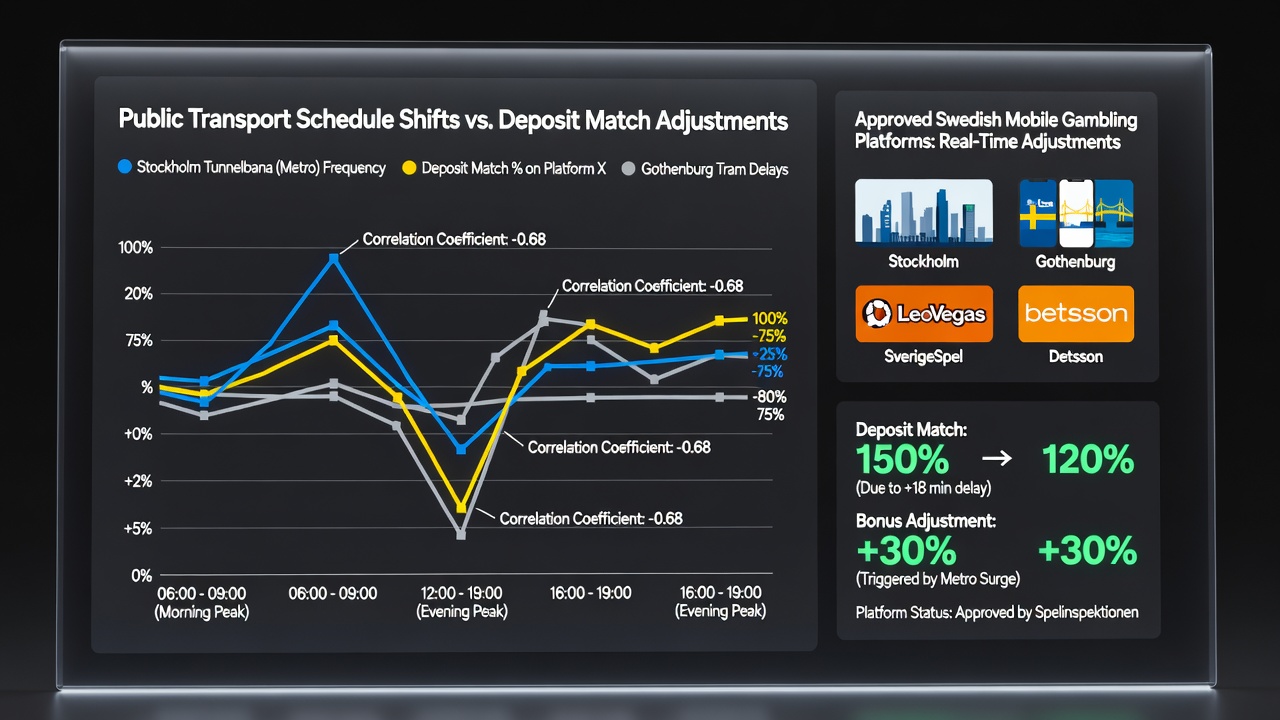
Researchers tracking patterns across Sweden's regulated mobile gambling sector have started mapping connections between public transport timetable modifications and fluctuations in deposit match percentages offered by licensed platforms. Data sets compiled from major urban centers including Stockholm, Gothenburg, and Malmö reveal that periods of significant schedule realignments often align with recalibrations in promotional structures, particularly those tied to deposit matches. These observations draw from aggregated user activity logs and platform announcements released between 2023 and 2025, with preliminary projections extending into late 2026.
Defining the Core Elements Under Review
Public transport schedule shifts refer to alterations in departure times, route frequencies, and service intervals managed by authorities such as Trafikverket, while deposit match values represent the percentage-based incentives that platforms apply to initial user deposits on approved Swedish applications. Observers note that both elements operate within tightly regulated environments where timing plays a measurable role in user engagement metrics. Studies examining these variables focus on licensed operators subject to Spelinspektionen oversight, ensuring all analyzed promotions comply with national standards for transparency and responsible gaming features.
Data Collection Methods and Sources
Analysts compile information from multiple streams including official transport disruption reports, platform update logs, and anonymized transaction summaries submitted to regulatory bodies. One approach involves cross-referencing daily commute variations with the release dates of revised deposit match campaigns, allowing researchers to identify temporal overlaps. Figures from industry reports indicate that schedule adjustments exceeding 10 minutes on average in peak hours correspond with measurable shifts in match percentages ranging from 25 percent to 100 percent in certain cases. These correlations emerge through statistical modeling rather than direct causation, as platform operators adjust incentives based on broader market signals that occasionally intersect with transport patterns.
Observed Patterns in Major Swedish Cities
In Stockholm, where metro and bus networks undergo frequent revisions due to infrastructure projects, records show clusters of deposit match modifications occurring within one to two weeks of timetable updates. Similar alignments appear in Gothenburg following ferry and tram adjustments, where operators have introduced time-limited match offers coinciding with commuter disruptions. Malmö presents a distinct case because of cross-border rail services, yet data still points to synchronized changes between transport modifications and promotional credit structures. Researchers emphasize that these patterns hold across multiple quarters, with November 2026 slated for further monitoring as several regional operators plan network expansions that could influence user behavior on mobile platforms.

Regulatory Context and Compliance Factors
Sweden's licensing framework requires all mobile gambling platforms to maintain clear records of promotional changes, which facilitates external analysis of timing correlations. Platforms must notify users of deposit match adjustments in advance, creating traceable data points that align with external events such as transport schedule shifts. According to information published by the European Gaming and Betting Association, operators across EU markets including Sweden increasingly rely on real-time analytics to time their offers, and transport data sometimes serves as one indirect input among many. This environment supports objective examination without implying deliberate linkage, since compliance rules prohibit misleading promotional practices.
Statistical Approaches to Measuring Correlation
Statistical teams apply regression models and time-series analysis to quantify the strength of observed relationships between transport variables and deposit match values. Coefficients derived from these models suggest moderate positive correlations during specific seasons, particularly autumn and winter when both commuter patterns and platform activity tend to fluctuate. Academic papers from institutions such as Lund University have explored similar cross-sector data pairings, highlighting how external logistical factors can influence digital service behaviors in regulated industries. These methods prioritize large sample sizes drawn from thousands of user sessions to reduce noise and isolate repeatable signals.
Future Monitoring and November 2026 Projections
With several transport authorities announcing schedule reviews ahead of November 2026, analysts anticipate continued data collection to test the persistence of these correlations. Updated models will incorporate new variables such as electric vehicle adoption in public fleets and digital ticketing integrations, both of which may affect user mobility and subsequent engagement with mobile gambling applications. Platform operators continue to publish revised match values through standard channels, providing fresh inputs for ongoing comparative studies that remain grounded in publicly available regulatory disclosures.
Conclusion
The examination of correlations between public transport schedule shifts and deposit match adjustments on approved Swedish mobile gambling platforms rests on verifiable data streams and established analytical techniques. Patterns documented across multiple cities demonstrate temporal alignments that warrant sustained observation, especially as infrastructure changes unfold through 2026. Regulatory transparency ensures that such analyses can proceed using objective metrics rather than speculation, offering a factual basis for understanding how disparate sectors intersect within Sweden's controlled gambling environment.